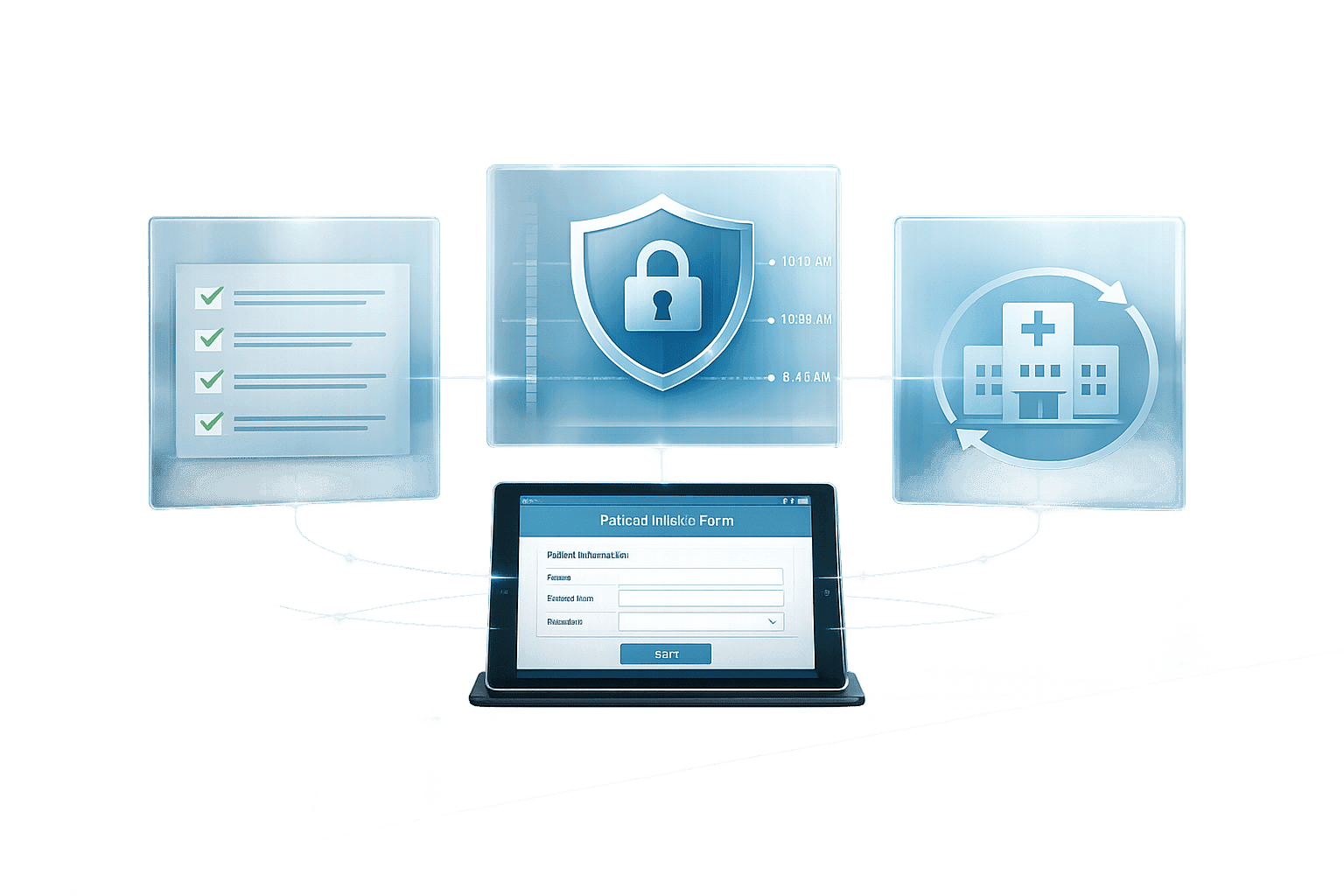
How AI Improves HIPAA-Compliant Intake
Healthcare Technology
Updated Apr 10, 2026
AI speeds and secures patient intake by automating data entry, EHR sync, audit trails, and HIPAA-compliant controls.
AI is reshaping patient intake processes by automating tasks like data entry, insurance verification, and EHR integration - all while meeting strict HIPAA security standards. Here's how it works:
Faster Check-Ins: AI reduces intake time from 7–10 minutes to under 60 seconds, cutting errors to below 0.5%.
Improved Accuracy: Optical Character Recognition (OCR) and AI tools process forms with 99.2% accuracy, eliminating manual mistakes.
Enhanced Security: Features like AES-256 encryption, TLS 1.2+ protocols, and role-based access controls protect patient data.
No-Show Reduction: AI models predict and prevent no-shows, filling more appointments and reducing scheduling gaps.
Compliance: Immutable audit trails, six-year data retention, and signed Business Associate Agreements (BAAs) ensure HIPAA compliance.
AI-powered systems not only streamline workflows but also improve patient care by identifying more clinical intervention opportunities and reducing administrative burdens. Practices adopting these tools report dramatic improvements in efficiency, accuracy, and compliance.
AI-powered Voice Patient Intake
How AI Maintains HIPAA Compliance During Patient Intake
AI intake systems ensure compliance with HIPAA by combining advanced technical protections with strict administrative oversight. These measures safeguard Protected Health Information (PHI) from unauthorized access while maintaining operational efficiency. Below, we’ll explore the technical tools that secure patient data during intake and the administrative policies that reinforce these efforts.
Technical Security Features in AI Systems
AI platforms employ a range of security features to protect patient data. One key method is role-based access controls, which limit PHI visibility based on an employee's job responsibilities. For example, front desk staff might only see scheduling details, while billing teams have access to insurance information. Multi-factor authentication adds another layer of protection, requiring users to verify their identity before accessing the system.
Additionally, AI systems create immutable audit trails that track every interaction with electronic PHI. According to the HIPAA Security Rule (§164.312(b)), organizations must log and review all activities involving PHI [3][4][6]. These logs capture detailed information, including user identities, precise UTC timestamps, and whether actions like data creation, access, or deletion were successful. Advanced systems also monitor data exports, recording what data was exported, by whom, and to where [5].
AI-powered tools take this a step further by analyzing logs to detect unusual activity. For instance, they can flag anomalies such as bulk record access - like a user accessing 800 records when their typical activity involves only 45 - or after-hours logins from unexpected locations [3]. Aleksei Zakharov, Product Manager at John Snow Labs’ Generative AI Lab, highlights the importance of these logs:
"The challenge is turning those logs into answers when they matter most: during audits, investigations, or when suspicious patterns emerge" [5].
While these technical measures provide a strong defense, administrative policies are equally critical to ensuring compliance.
Administrative Controls for AI Systems
Administrative oversight plays a crucial role in maintaining HIPAA compliance. Healthcare organizations must include AI systems in their security risk analysis to identify vulnerabilities like model memorization, prompt injection, or unauthorized access to logs [2]. This evaluation helps uncover potential risks and ensures that all AI tools used for clinical, billing, or intake tasks are accounted for, preventing the emergence of "Shadow AI" - systems deployed without proper Business Associate Agreements (BAAs) [2].
Moreover, oversight must extend beyond the organization to include the AI vendor's subcontractors. It's essential to verify that supporting cloud providers and other third parties are also bound by BAA terms [2]. These administrative policies, combined with technical safeguards, create a comprehensive framework for protecting patient data during intake.
How AI Speeds Up Patient Intake Processes
AI transforms the traditionally slow patient intake process into a fast and efficient system, cutting the time needed from several minutes to just seconds. Typically, front desk staff spend 7–10 minutes per patient manually transferring information from paper forms into Electronic Health Records (EHR), with an error rate of 3–5% [8]. By automating this process, AI-powered tools reduce the time to under 60 seconds while lowering error rates to below 0.5% [8].
Automated Patient Information Collection
AI intake systems leverage Optical Character Recognition (OCR) and Large Language Models to extract data from scanned PDFs or handwritten forms and input it directly into the EHR without human assistance [8]. Parker Gawne, Founder of Syntora, highlights the efficiency of these tools:
"A typical 5-page intake packet is processed in under 60 seconds, eliminating manual data entry" [8].
Patients can complete forms, upload insurance cards, and sign documents digitally on any device - an essential feature since many patients prefer not to download apps for a single visit [7][10]. For returning patients, AI systems pre-fill forms with existing data, saving time and avoiding repetitive input [7][11]. Additionally, intelligent surveys dynamically adjust questions based on prior responses, gathering detailed symptom and medical history information before the appointment even begins [9]. These systems also handle real-time insurance verification and copay calculations, streamlining the check-in process [7][10].
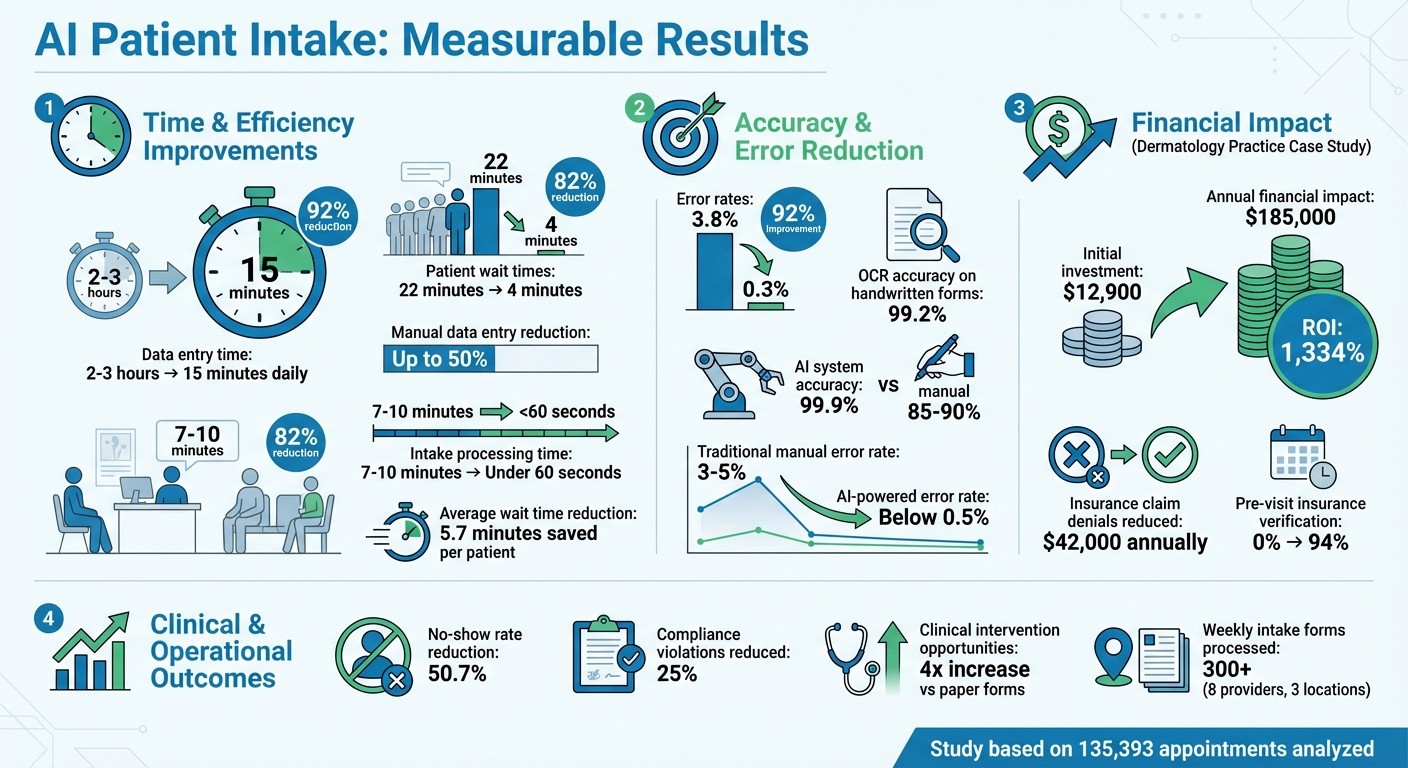
One healthcare network in the UAE analyzed 135,393 appointments and reported that AI-powered intake reduced patient wait times by an average of 5.7 minutes and decreased no-show rates by 50.7% [1].
Beyond speed, these systems adhere to HIPAA standards, ensuring secure data handling while improving accuracy and efficiency.
Reducing Errors and Maintaining Data Accuracy
AI not only speeds up data collection but also significantly improves accuracy by eliminating common manual entry mistakes. These tools validate required fields, ensure proper date formats, and check insurance number patterns [8]. Automated routing systems further enhance efficiency by directing completed forms to the appropriate department immediately, preventing misfiled paperwork [11].
To ensure the highest level of accuracy, Human-in-the-loop (HITL) review plays a key role. Staff review AI-generated outputs to catch any errors, particularly in critical areas like diagnosis codes or treatment recommendations. This blend of automated validation and human oversight ensures reliable data while freeing staff to focus on reviewing exceptions rather than entering all details manually [8].
Connecting AI Intake Tools with Healthcare Software
AI intake systems, designed with HIPAA compliance in mind, seamlessly integrate with existing EHRs, CRMs, and scheduling tools. This eliminates the need for manual data transfers and creates a streamlined workflow. These systems use custom connectors to link with major EHR platforms like Epic, Cerner, Athenahealth, and Kareo. To further ensure patient privacy, policy proxies remove identifying details, adhering to data minimization principles. Secure integrations leverage industry-standard protocols to protect sensitive information, enabling instant data synchronization across all connected systems.
Real-Time Data Updates Across Systems
When a patient fills out an intake form, AI tools automatically log the information into the CRM and update the EHR - completely removing the need for staff intervention [12]. This automation not only eliminates duplicate data entries but also keeps records consistently up-to-date across departments. For instance, AI-powered document parsing can convert referrals received via faxes, emails, or portals into structured, searchable data in real time, saving staff from manual re-entry tasks [14].
Administrative costs currently account for about 40% of healthcare organizations' expenses [13]. By automating data entry and enabling seamless synchronization between AI tools, CRMs (like Salesforce), and EHR systems, these tools significantly reduce the administrative workload. Research highlights that 77% of patients prefer completing digital forms for demographics and insurance details before their appointments [10]. Real-time integration makes it easier for practices to meet this preference while maintaining operational efficiency. Additionally, as practices grow, the ability of AI systems to scale ensures they can handle increased patient volumes without added strain.
Scaling AI Solutions as Your Practice Grows
With secure integrations in place, scaling AI systems can further enhance patient care and streamline operations. These tools can manage growing patient loads without requiring proportional increases in staff or operational costs [12]. A recommended approach includes starting with a two-week audit, piloting a critical process over 4–6 weeks, and then rolling out full implementation. Advanced organizations are even employing orchestration layers to coordinate AI agents across departments for tasks like eligibility checks, medical coding, and appeals.
To ensure controlled growth, consider forming an AI Governance Council with representatives from IT, compliance, and clinical leadership. This council can oversee new AI use cases, assigning risk levels and approving implementations. Additionally, enterprise-grade APIs under a Business Associate Agreement (BAA) and tamper-proof audit logs stored in Write-Once-Read-Many (WORM) systems - such as AWS S3 Object Lock - help maintain compliance by ensuring data integrity for the required six-year retention period.
For healthcare practices looking to adopt scalable, HIPAA-compliant solutions, Lead Receipt offers AI-powered receptionist and automation services. These tools integrate effortlessly with existing EHR, CRM, and scheduling platforms, creating a unified and efficient workflow.
Results and Performance Metrics from AI Intake Systems
AI-Powered Patient Intake: Performance Metrics and ROI
Healthcare organizations that adopt AI-powered intake systems are seeing impressive improvements in efficiency, cost management, and compliance, all while adhering to strict HIPAA standards. These advancements directly contribute to both financial and clinical improvements, as outlined below.
Time Savings and Operational Efficiency
Consider a multi-location dermatology practice that implemented a three-agent AI intake system in early 2025. With eight providers across three offices, they handled over 300 intake forms each week[16]. The results were striking:
Data entry time dropped by 92%, from 2–3 hours daily to just 15 minutes.
Patient wait times were reduced by 82%, shrinking from 22 minutes to 4 minutes.
Error rates plummeted from 3.8% to 0.3%[16].
The practice administrator shared their experience:
"Our staff previously spent hours transferring form data into Athenahealth; now, AI completes this task before the patient arrives. Errors dropped from nearly 4% to 0.3%, our wait times went from 22 minutes to 4."
Practice Administrator, Multi-Location Dermatology Practice[16]
The financial results were equally compelling. With an initial investment of $12,900, the practice saw an annual financial impact of $185,000 - an ROI of 1,334%. This included cutting insurance claim denials by $42,000 annually and achieving a pre-visit insurance verification rate of 94%, up from 0%[16].
More broadly, AI systems have been shown to reduce manual data entry by as much as 50%[15]. Additionally, AI-driven no-show prediction models have cut missed appointments by over 50%, streamlining scheduling and boosting revenue[1].
These operational improvements also contribute to better compliance, as discussed below.
Better Compliance Rates and Fewer Security Issues
Improved speed and accuracy in data processing not only enhance efficiency but also bolster HIPAA compliance by reducing human errors. For example, the dermatology practice achieved 99.2% accuracy in processing handwritten forms using OCR-based technology[16].
AI systems also include technical safeguards like encryption and detailed audit trails, ensuring data security and HIPAA compliance at every step.
Additionally, these systems are proving to be clinically valuable. AI-enhanced intake processes can identify up to four times more clinical intervention opportunities compared to traditional paper forms. This supports better clinical decision-making while maintaining the high security and privacy standards required under HIPAA regulations[1].
Conclusion: AI's Role in HIPAA-Compliant Patient Intake
AI-powered patient intake systems are transforming healthcare workflows, delivering faster onboarding - by 40–60% - while reducing compliance violations by 25% and achieving an impressive 99.9% data accuracy compared to the 85–90% seen with manual processes [17][18]. By incorporating advanced encryption, strong authentication protocols, tamper-proof audit logs, and role-based access controls, these systems ensure the security of Protected Health Information (PHI) from the moment of patient interaction to its entry into Electronic Health Records (EHR).
Lead Receipt is one example of an AI solution tailored for healthcare. It offers AI-driven receptionists that handle compliance tasks seamlessly. With 24/7 call handling and scheduling tools, it integrates directly with existing CRMs and EHR systems using secure APIs. This ensures HIPAA compliance while reducing the administrative burden on staff. Additionally, every interaction is logged with an audit trail, backed by a signed Business Associate Agreement (BAA).
For healthcare practices looking to adopt AI for patient intake, a step-by-step approach is key. Start by choosing vendors with SOC 2 Type II and HIPAA BAA certifications. Begin with automating intake processes to evaluate results, then gradually expand to full system integrations [17][18]. This phased method allows staff to adapt to the changes while maintaining essential human oversight for administrative HIPAA controls [19].
FAQs
Does AI patient intake count as a HIPAA “business associate”?
AI-driven patient intake tools that handle Protected Health Information (PHI) are classified as HIPAA "business associates" when a third-party vendor processes PHI for a covered entity. To stay compliant, it's essential to establish a Business Associate Agreement (BAA) between the vendor and the covered entity.
How can AI reduce no-shows without using extra PHI?
AI can cut down on no-shows by streamlining patient engagement - no extra PHI needed. It handles tasks like sending timely reminders, proactively rescheduling appointments, and engaging with patients in a natural way. All of this happens under strict HIPAA-compliant measures, including encryption and controlled access, so patient data stays secure and private.
What should we audit before connecting AI intake to our EHR?
Before linking AI intake to your EHR, it's crucial to review essential data protection measures. Start by verifying the use of encryption standards like AES-256, ensuring data remains secure. Check for secure data transmission protocols, such as TLS, to safeguard information during transfers. Implement access controls, including multi-factor authentication and role-based permissions, to limit access to sensitive data. Additionally, confirm that Business Associate Agreements (BAAs) are established with all AI vendors to comply with HIPAA regulations.