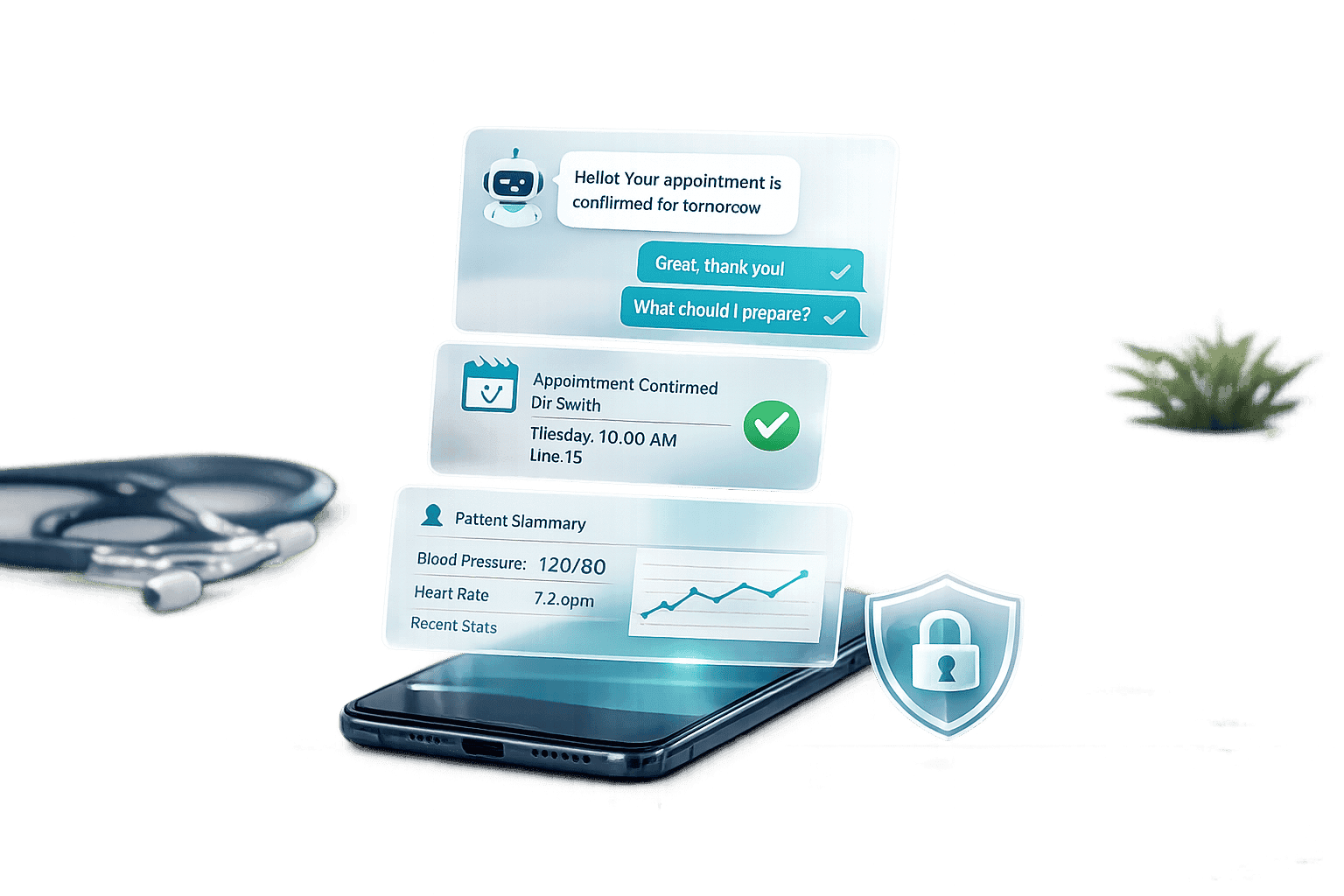
Best AI Chatbot Platforms for Healthcare Appointment Scheduling and Patient Messaging
Healthcare Technology
Updated Mar 16, 2026
Compare top AI chatbots that automate appointment scheduling, patient messaging, EHR integrations, and HIPAA-compliant workflows for clinics of any size.
AI chatbots are transforming healthcare by automating appointment scheduling and patient communication. These platforms help reduce call center workloads, cut missed appointments, and improve patient satisfaction. Here's a quick overview of the top options:
Lead Receipt: A 24/7 virtual receptionist with multilingual messaging, HIPAA compliance, and EHR integrations. Plans start at $300/month.
Prosper AI (Anna): Voice-first scheduling assistant with deep EHR integrations and zero hold times. Pricing is usage-based.
eesel AI: Customizable chatbot using help desk data for scheduling and messaging. Starts at $239/month.
SmartBot360: Pre-built healthcare templates for quick deployment. Pricing is quote-based.
Ada Health: Focuses on symptom checking and triage. Starts at $500/month.
Youper: Specializes in mental health support using therapeutic messaging.
Hyro: Scalable for large health systems with advanced EHR integrations. Starts at $10,000/month.
Voiceoc: WhatsApp-heavy scheduling and messaging for small to mid-sized clinics.
Wonderchat: No-code chatbot builder with multilingual support and message-based pricing.
Sensely: Virtual nursing assistant for chronic care management.
Babylon Health: AI-driven health assessments with live physician support.
Quick Comparison:
Platform | Focus Area | Starting Price | Best For |
|---|---|---|---|
Lead Receipt | Scheduling & Messaging | $300/month | Clinics of all sizes |
Prosper AI | Voice-first Scheduling | Usage-based | Multi-provider groups |
eesel AI | Customizable Scheduling | $239/month | Mid-sized practices |
SmartBot360 | Pre-built Templates | Quote-based | Quick setup needs |
Ada Health | Symptom Checking & Triage | $500/month | Triage-focused organizations |
Youper | Mental Health Support | N/A | Behavioral health providers |
Hyro | Large-scale Interactions | $10,000/month | Enterprise health systems |
Voiceoc | WhatsApp-heavy Clinics | Quote-based | Small to mid-sized clinics |
Wonderchat | No-code Chatbot Builder | $0.02/message | Small practices |
Sensely | Chronic Care Management | N/A | Chronic care providers |
Babylon Health | Virtual Clinic Services | Custom | Integrated care solutions |
These tools help healthcare providers save time, reduce costs, and improve patient engagement. Choose based on your clinic's size, needs, and focus area.
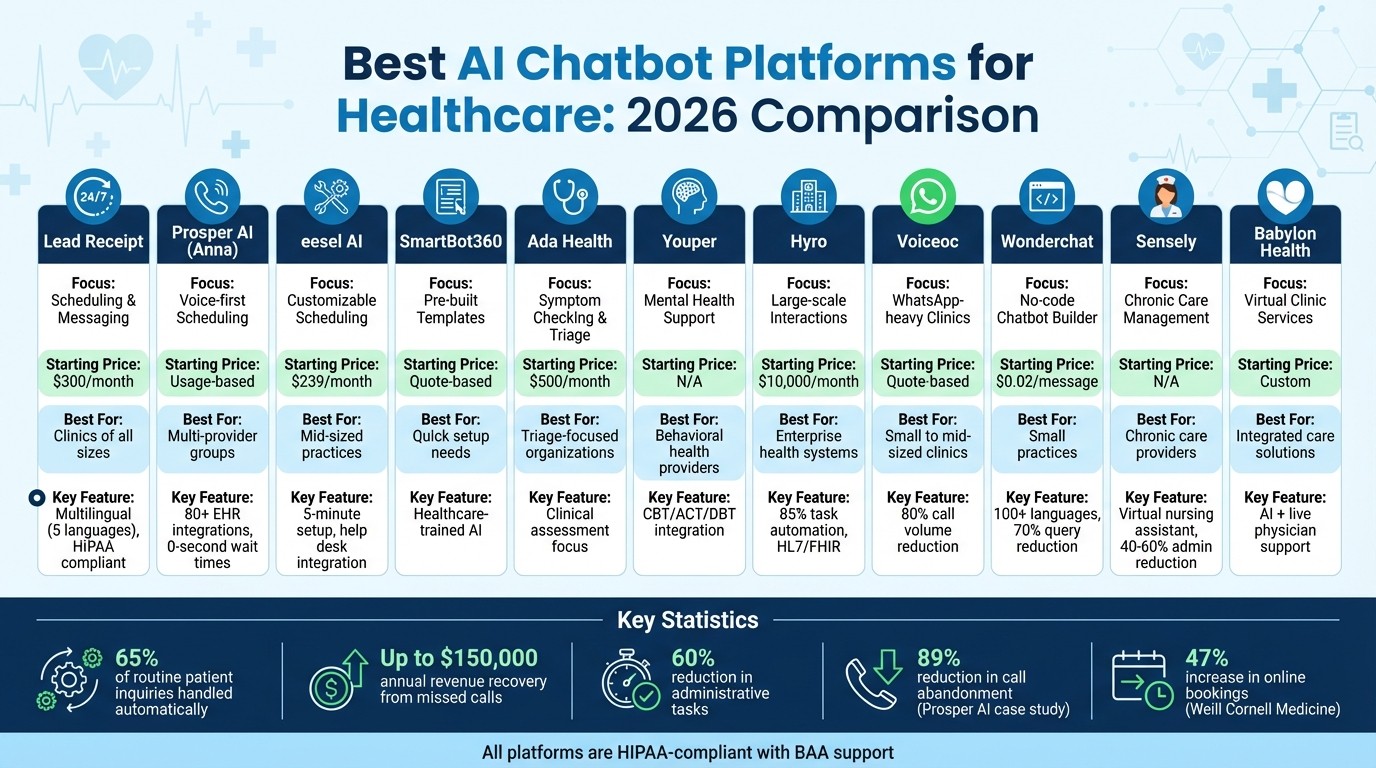
AI Chatbot Platforms for Healthcare: Feature and Pricing Comparison 2026
AI Chatbots in Healthcare Improving Patient Engagement
1. Lead Receipt
Lead Receipt is reshaping how healthcare providers manage appointment scheduling and patient communication. Acting as a 24/7 AI Virtual Receptionist, it’s designed to streamline operations for healthcare practices while improving patient access. Whether through voice calls or web chats, the platform ensures patients can communicate through their preferred channels, making it a versatile tool in today’s fast-paced healthcare environment.
Appointment Scheduling Capabilities
Lead Receipt automates the entire scheduling process - handling bookings, rescheduling, and cancellations without requiring human input. By analyzing patient preferences and scheduling trends, it optimizes appointment slots to minimize calendar gaps. Practices using the Professional plan can manage up to 100 AI-driven calls per day, while the Enterprise plan offers unlimited call capacity, ideal for larger systems or multi-location practices.
These scheduling tools are complemented by advanced messaging features, creating a seamless experience for both patients and providers.
Patient Messaging Features
Beyond scheduling, Lead Receipt enhances patient engagement with its multilingual messaging capabilities. The platform supports interactions in up to 5 languages under the Professional plan, catering to diverse patient populations and addressing the need for inclusive communication. It also ensures continuity by keeping the context of conversations intact across channels, allowing for personalized and consistent follow-ups.
EHR Integration Compatibility
To simplify workflows, Lead Receipt integrates smoothly with existing CRMs and scheduling software. This enables automated data sharing between patient communications and clinical systems, reducing manual entry and ensuring information stays up-to-date. While integration specifics depend on the implementation, the Enterprise plan includes advanced options tailored to complex healthcare workflows, making it an efficient choice for larger organizations.
Compliance and Security Standards
Lead Receipt prioritizes privacy and security, meeting the stringent requirements of healthcare regulations. The platform is HIPAA-compliant and employs enterprise-level encryption to safeguard all patient interactions, whether voice recordings or chat transcripts. For organizations with additional regulatory needs, the Enterprise plan provides enhanced compliance features, ensuring peace of mind when managing sensitive patient data.
Pricing and Cost Structure
Plan | Monthly Cost | Call Capacity | Primary Use Case |
|---|---|---|---|
Starter | $300 | Web-chat only | Practices needing 24/7 web coverage for patient intake |
Professional | $750 | Up to 100 calls/day | Growing practices handling moderate call volumes |
Enterprise | Custom pricing | Unlimited/Scalable | Large healthcare systems requiring full automation |
The Starter plan focuses on web-based interactions across up to three domain names, while the Professional plan adds dedicated phone line support. For larger systems, the Enterprise tier offers custom pricing, a dedicated AI consultant, and VIP support for complex implementations. These flexible options ensure Lead Receipt can adapt to the needs of practices of all sizes.
2. Prosper AI Appointment Scheduling (Anna)
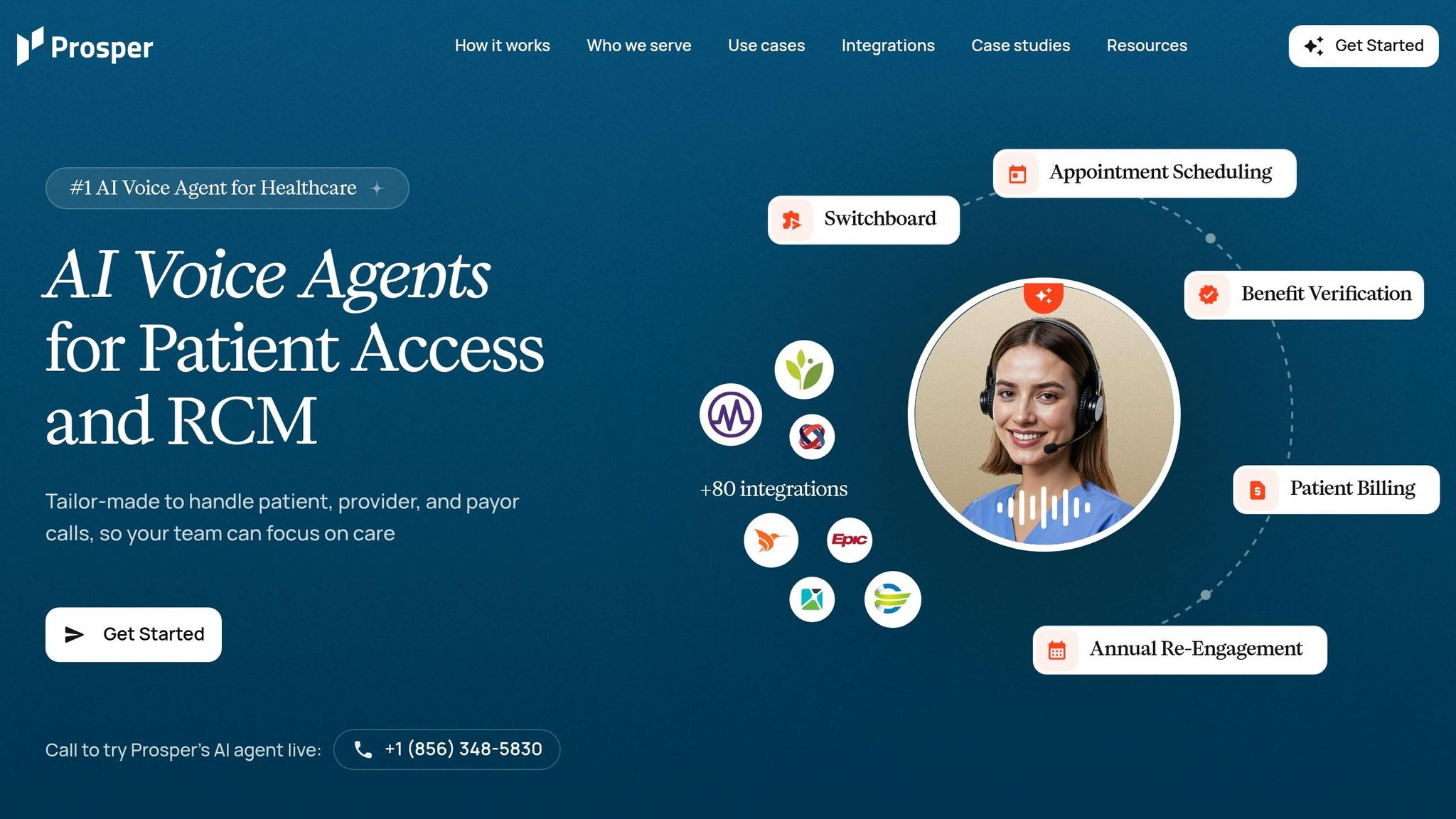
Anna, Prosper AI's voice-first scheduling assistant, acts as a round-the-clock receptionist, answering patient calls instantly. This eliminates hold times entirely, delivering a 0-second wait for inbound calls. In early 2026, a Northeast OB/GYN group with over 100 providers implemented Anna to manage more than half of its front-desk scheduling and waitlist tasks. Within weeks, they saw an 89% reduction in call abandonment rates - a game-changer for patient satisfaction and operational efficiency [4][5].
Appointment Scheduling Capabilities
Anna takes care of booking, rescheduling, and cancellations while seamlessly integrating with electronic health records (EHR). By managing 50% of routine front-desk calls, Anna allows staff to focus on complex cases and in-person patient interactions. The platform also automates waitlist management, filling cancellations and open slots to optimize provider schedules. On top of that, Anna verifies patient eligibility and benefits in under two hours with 99% accuracy, and she can even handle payments and outstanding balances [4].
EHR Integration Compatibility
Prosper AI connects with more than 80 EHR and practice management systems, including Epic, athenahealth, Cerner, MEDITECH, NextGen, and eClinicalWorks. Using native APIs, FHIR, HL7 v2, and SFTP, the platform enables real-time data exchange. Anna adheres to existing provider rules, templates, and scheduling protocols, ensuring all automated bookings meet clinical guidelines. While batch data pilots can go live in just 1–2 days, full EHR or API integrations usually take about three weeks [4][5].
Compliance and Security Standards
The platform is fully HIPAA-compliant and operates under a signed Business Associate Agreement (BAA). It holds SOC 2 Type II attestation and uses AES 256-bit encryption for data at rest and TLS encryption for data in transit. Prosper AI maintains a zero-day retention policy, ensuring sensitive data is not used for model training. Anna also supports Single Sign-On (SSO) with providers like Google, Azure, Okta, and GitHub. Daily backups with a 30-day retention policy and a 99.99% uptime target (backed by a 99.9% SLA) ensure reliability and security [4][5].
Pricing and Cost Structure
Prosper AI follows a usage-based pricing model with volume-based tiers. Practices can request custom quotes tailored to their call volumes and integration needs, making it a flexible option for clinics of various sizes [4][5].
3. eesel AI
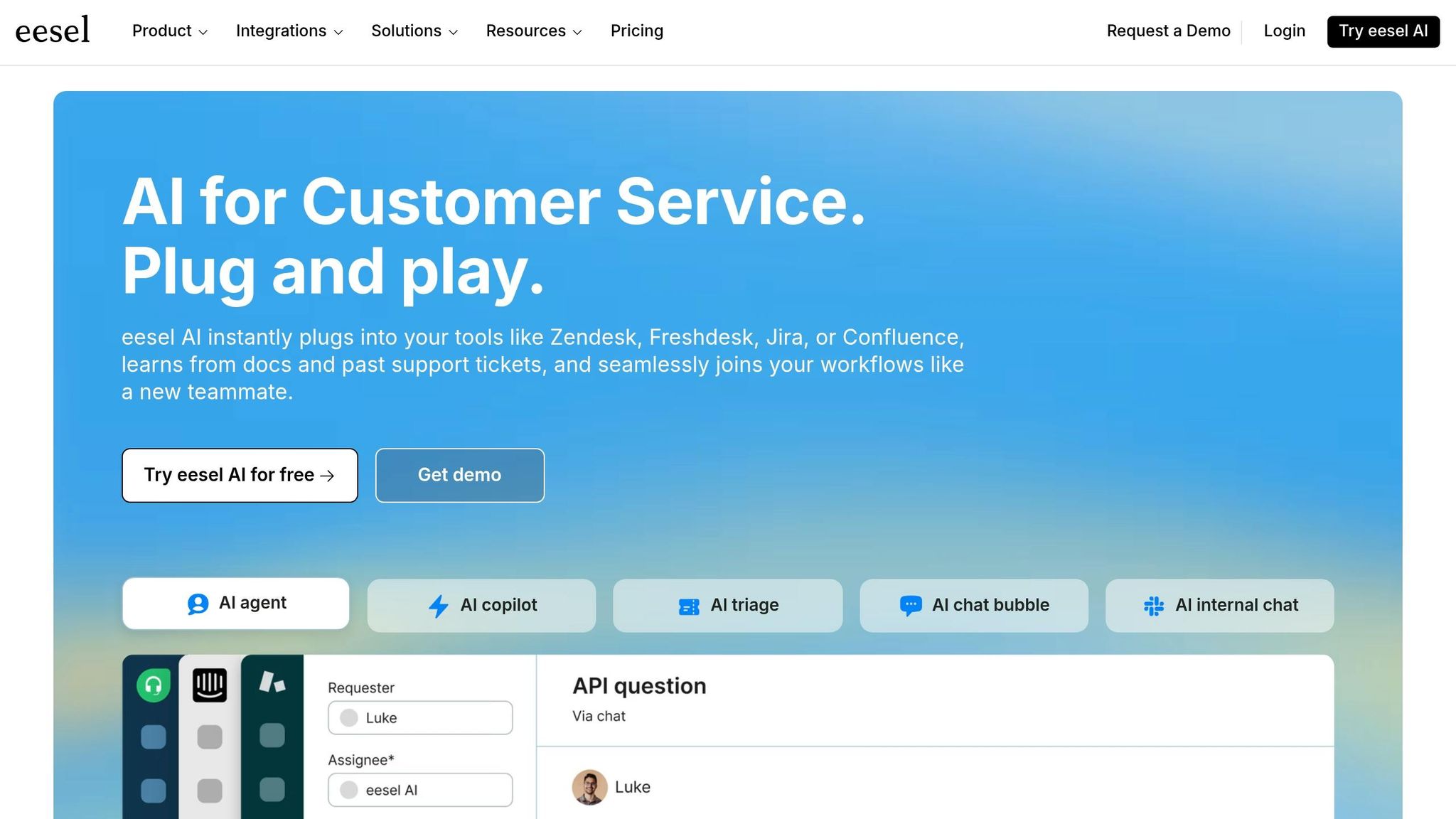
eesel AI stands out by offering a highly adaptable platform instead of a generic, one-size-fits-all chatbot. It doesn’t rely on standard databases; instead, it customizes responses using your practice's help desk data, internal documents, and website content to align with your specific protocols.
Appointment Scheduling Capabilities
eesel AI uses natural language processing (NLP) to handle straightforward patient requests. For instance, a patient can simply type, "Reschedule my appointment to next Tuesday afternoon," and the AI processes the request without requiring them to navigate complicated menus. It integrates seamlessly with your existing systems through custom API calls, letting the bot check availability, book appointments, or handle rescheduling effortlessly. You can even test its functionality risk-free by simulating real patient interactions with historical data. Plus, the platform’s self-service setup means you can deploy it in just minutes - no development team required.
EHR Integration Compatibility
Beyond scheduling, eesel AI connects with major electronic health record (EHR) systems via custom API calls, ensuring real-time data sharing with the tools you already use. It also integrates with platforms like Zendesk, Freshdesk, and Google Docs, making it easy to preserve your current workflows and infrastructure.
Compliance and Security Standards
Data security and compliance are central to eesel AI. The platform is fully HIPAA compliant and offers a Business Associate Agreement (BAA) through its subprocessors, ensuring patient data stays protected. You also have full control over the AI’s personality and knowledge base, allowing you to create custom workflows that escalate sensitive or complex queries to live staff when needed.
Pricing and Cost Structure
The Team plan for eesel AI starts at $239 per month (billed annually). Instead of charging per resolution, pricing is based on the number of AI interactions, giving you predictable monthly costs without unexpected fees [6].
4. SmartBot360
SmartBot360 offers pre-built templates designed for common healthcare tasks like pre-visit questionnaires, patient assessments, and SMS follow-ups. Its AI is trained on real patient conversations, giving it a better grasp of healthcare-specific language compared to generic chatbot systems.
Appointment Scheduling Capabilities
This platform simplifies administrative tasks that often weigh down front-desk staff. When a patient requests an appointment, SmartBot360 automatically collects essential information, such as insurance details, reasons for the visit, and updates to medical history. By handling these tasks upfront, it reduces the time your team spends on phone calls, allowing them to focus on more patient-centered activities. The setup process is quick - taking just hours or days instead of weeks - making it a much faster solution compared to larger enterprise platforms. This automation not only improves front-desk efficiency but also ensures smoother data flow across your systems.
EHR Integration Compatibility
SmartBot360 connects directly with EHR systems, syncing patient data and streamlining workflows. It pulls information from FAQs, chat logs, and your website, ensuring that all relevant data integrates seamlessly into your EHR.
Compliance and Security Standards
Built specifically for healthcare, SmartBot360 is fully HIPAA compliant and uses SMS and email verification to secure patient communications. Unlike general-purpose chatbots that are adapted for healthcare use, SmartBot360 is designed to handle sensitive health information from the ground up.
Pricing and Cost Structure
SmartBot360 operates on a quote-based pricing model, so you'll need to contact their sales team for a custom quote based on your practice's size and needs. While the platform's template-based approach enables quick deployment, customization options are somewhat limited. It offers more flexibility than basic symptom checkers but less than fully custom platforms, which could be a consideration if your practice has very specific workflow requirements outside their standard templates [6].
5. Ada Health
Ada Health focuses on guiding patients to the right care through its AI-powered symptom checker. This tool asks targeted questions to assess symptoms and determine the appropriate level of care. Unlike platforms that prioritize automated appointment scheduling, Ada Health emphasizes triage, ensuring patients are directed efficiently based on clinical needs. This approach streamlines subsequent scheduling by filtering patients more effectively [3].
Appointment Scheduling Capabilities
Ada Health acts as a triage tool before scheduling. It uses an evidence-based knowledge base to guide patients and ensures they book appointments only after being matched with the right level of care [1][7].
EHR Integration Compatibility
Ada Health leans heavily on clinical guidance and symptom assessment rather than direct integration with major EHR systems like Epic or athenahealth. While it supports API-based connections with calendar systems and telehealth platforms, deeper EHR integration may require additional middleware or custom solutions tailored to your existing systems [7].
Compliance and Security Standards
The platform adheres to HIPAA regulations through Business Associate Agreements (BAAs) and employs robust encryption standards. Security measures include role-based access controls, patient identity verification, and detailed audit trails for compliance reporting. Ada Health also incorporates clinical safety protocols, such as recognizing symptom severity and emergency situations, ensuring both patient safety and data protection [1].
Pricing and Cost Structure
Ada Health offers pricing starting at $500 per month for small teams, with custom quotes available for enterprise-level solutions [7]. Its features include multilingual and configurable booking flows, with costs scaling based on the size and needs of the organization.
6. Youper
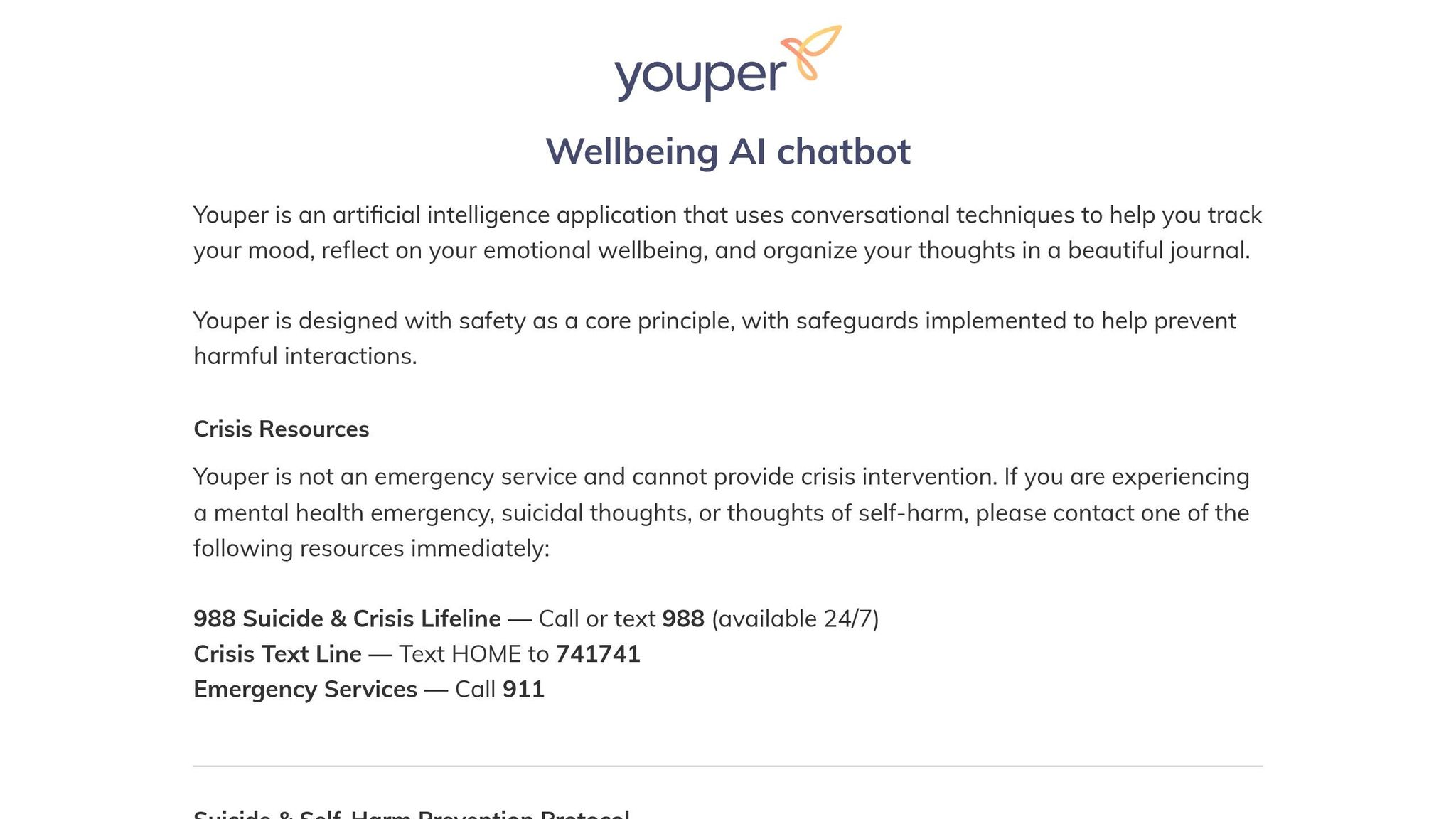
Youper focuses on mental health support through the use of conversational AI. Instead of merely handling appointment bookings, it uses Emotional AI to engage patients in therapeutic conversations. This approach makes it a strong fit for behavioral health practices aiming to keep patients engaged between clinical visits.
Patient Messaging Features
The platform's messaging tools emphasize therapeutic communication, utilizing Natural Language Processing (NLP) to interpret patient emotions in real time. Youper’s chatbot integrates evidence-based techniques from Cognitive Behavioral Therapy (CBT), Acceptance and Commitment Therapy (ACT), and Dialectical Behavior Therapy (DBT) within its text-based interactions. This means patients can access immediate emotional support through messaging, which is especially helpful for mental health providers who want to extend care beyond traditional appointment times. The focus on meaningful therapeutic engagement takes precedence over more traditional features like appointment scheduling.
Appointment Scheduling Capabilities
Youper is centered around patient support, not appointment management. Unlike other platforms prioritizing scheduling, Youper’s primary goal is fostering therapeutic engagement. Providers considering this tool should view it as a way to enhance mental health support rather than a comprehensive scheduling platform.
EHR Integration Compatibility
Youper’s integration with major EHR systems, such as Epic or athenahealth, has not been publicly confirmed. As a standalone tool designed for mental health engagement, providers will need to evaluate its compatibility with their existing systems before implementation.
7. Babylon Health
Babylon Health underwent significant changes following its collapse in August 2023. Once valued at over $4 billion, the company filed for Chapter 7 bankruptcy. However, its UK operations were acquired by eMed Healthcare UK and rebranded as "eMed GP at Hand" [8]. The platform now functions as a full-service virtual clinic, blending AI-powered health assessments with live consultations from physicians, aligning with the industry's move toward integrated care solutions.
Patient Messaging Features
The platform uses AI-driven conversations to address routine health inquiries, with a primary focus on symptom checking and clinical assessments. An internal medical database powers the AI to guide patients through symptom evaluations, which are then validated by human clinicians. This layered approach ensures clinical safety and accuracy throughout patient interactions. Additionally, the messaging system integrates seamlessly into broader clinical workflows, supporting efficient care delivery.
EHR Integration Compatibility
Babylon connects with major EHR systems to provide tailored care recommendations and facilitate population health management through integrated analytics [1]. The platform allows for bidirectional data exchange with existing healthcare infrastructures [6]. However, setting up these integrations often takes weeks, which is slower compared to some other platforms [6]. By pulling relevant patient data, Babylon supports chronic disease management and personalized care plans, enhancing its utility for long-term care strategies.
Compliance and Security Standards
The platform adheres to HIPAA regulations and incorporates human oversight to validate its AI-powered assessments [1][6]. This ensures clinical accuracy and secure data handling.
"In 2026, leading healthcare chatbots handle 65% of routine patient inquiries automatically while maintaining HIPAA compliance and clinical accuracy standards" – Dr. Claire Dave, Physician and AI-driven care automation lead [1].
These practices guarantee secure and consistent data integration across various clinical systems.
Pricing and Cost Structure
Babylon Health is not available as a standalone SaaS product. Instead, it is typically offered as a benefit through insurance plans or employers, using custom pricing models tailored for enterprise-level solutions [6]. This approach makes it less accessible for individual practices seeking direct subscription options, positioning Babylon as part of larger healthcare benefits packages.
8. Sensely
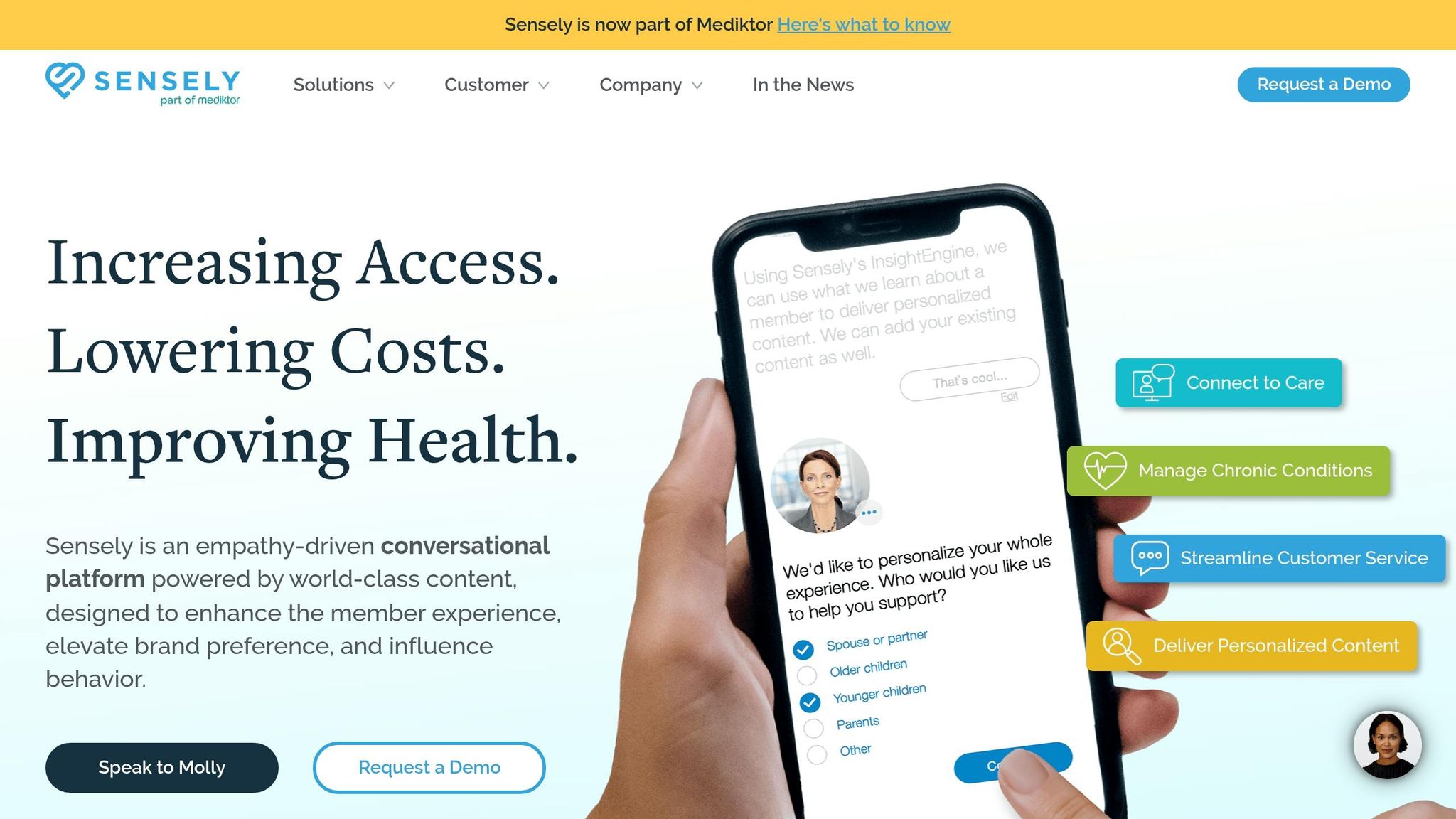
Sensely is all about virtual nursing assistants and managing chronic care. It uses interactive avatars to help patients track symptoms, stick to their medication schedules, and follow care plans between doctor visits. These avatars make it easier for patients with chronic conditions to stay engaged with their health.
Patient Messaging Features
Sensely’s messaging tools are designed to work seamlessly with its chronic care approach. The platform automates many routine tasks, like sending medication reminders and tracking symptoms, which are especially important for managing long-term health issues [1]. The visual, avatar-driven interface adds a personal touch, offering health coaching that keeps patients motivated and connected to their treatment plans even when they’re not in a clinical setting.
"Sensely specializes in virtual nursing assistants and chronic care management chatbots that support patient monitoring, medication adherence, and care plan execution." – Dr. Claire Dave, Physician and AI-driven care automation lead at S10.AI [1]
Beyond its patient-focused features, Sensely prioritizes data security. The platform adheres to HIPAA standards with end-to-end encryption, Business Associate Agreements (BAAs), and detailed audit trails [1]. It also employs advanced technical safeguards like TLS 1.3+ for secure data transmission and AES-256 encryption for stored information. Healthcare providers using Sensely have reported impressive results, including a 40-60% cut in administrative workload and a 25-30% boost in patient satisfaction scores [1]. By combining engaging virtual nursing tools with top-tier security, Sensely showcases how AI is transforming patient care in healthcare.
9. Hyro
As we move into 2026, Hyro continues to showcase how AI can streamline patient interactions in busy healthcare environments.
Hyro helps large health systems handle millions of patient interactions effortlessly across phone, web, and SMS. By using adaptive natural language understanding (NLU), it processes complex scheduling requests - like "I need to see someone about my knee pain next Tuesday afternoon" - without relying on rigid, scripted conversation flows. This flexibility has allowed organizations such as Intermountain Health and Novant Health to automate over 85% of repetitive tasks and divert 65% of incoming calls from contact centers [9].
Appointment Scheduling Capabilities
Hyro provides a seamless, 24/7 scheduling experience for both new and returning patients. Whether patients need to book, reschedule, or cancel appointments, they can do so easily using natural language queries. This reduces the strain on call centers and has led to a 47% increase in online bookings at Weill Cornell Medicine [9].
"What attracted us to Hyro was their adaptive approach. Our physician data is now easily accessible - and we're seeing 47% more appointments booked online." – Dr. Curtis Cole, CIO, Weill Cornell Medicine [9]
Hyro’s call-to-text deflection feature moves repetitive scheduling tasks from phone calls to SMS, allowing patients to book appointments via text. This reduces average hold times to just 3 seconds and boosts digital conversion rates by an impressive 600%. For more complex cases requiring human attention, the system intelligently routes these calls to live staff while handling simpler requests through AI [9]. These scheduling tools integrate smoothly with existing healthcare IT systems, ensuring a unified experience.
EHR Integration Compatibility
Hyro integrates seamlessly with Epic using HL7 and FHIR APIs, enabling real-time data synchronization. It also connects with platforms like Salesforce and Zendesk, ensuring patients receive a consistent experience across all touchpoints [9].
Compliance and Security Standards
Hyro adheres to rigorous standards, meeting HIPAA, SOC2 Type 2, and ISO 27001 requirements. It ensures patient data remains secure, with Protected Health Information (PHI) excluded from AI model training. The platform also includes emergency detection features to identify urgent keywords and redirect calls to live staff when necessary. Patients can securely verify appointment details and receive encrypted text messages, providing peace of mind [9].
Pricing and Cost Structure
Hyro’s pricing is customized for enterprise organizations, starting at around $10,000 per month. Implementation typically takes 3 to 5 weeks. The platform has delivered a 5.5X return on investment within six months of deployment, with noticeable results often appearing in as little as three months. Designed for high-volume, complex interactions, Hyro is ideal for large healthcare systems but less suited for smaller or independent practices [2].
10. Voiceoc
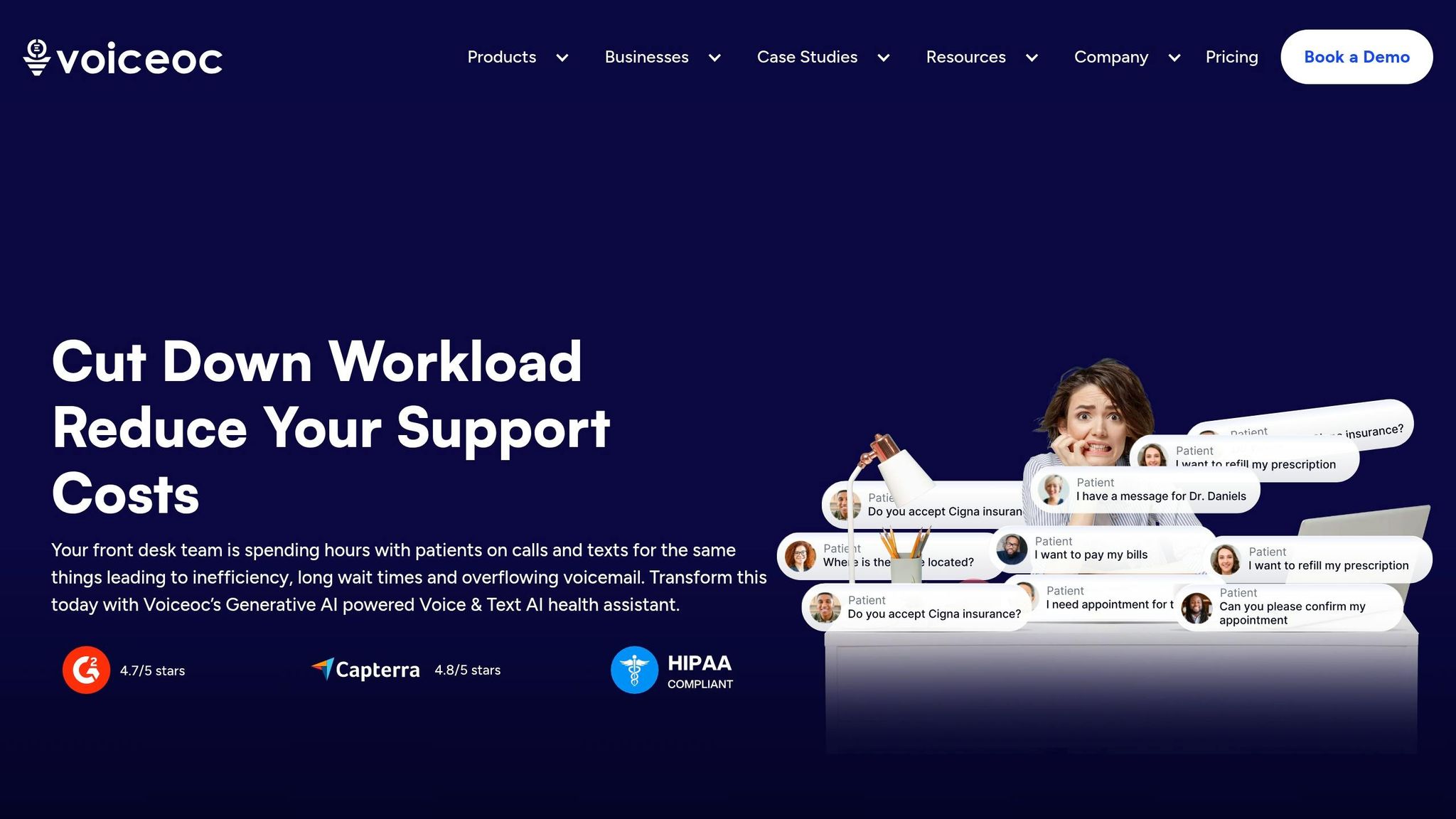
Voiceoc is a front desk automation platform tailored for hospitals and small to mid-size clinics aiming to ease administrative workloads. By focusing on practices with WhatsApp-heavy patient bases, it offers a multichannel approach that aligns with how patients prefer to communicate [11].
The platform has significantly impacted front desk operations. Healthcare clients report reducing front desk call volume by 80%, freeing staff to concentrate on more critical patient care tasks. This reflects a broader trend in healthcare, where AI voice agents can handle up to 70% of front-desk calls [11].
Appointment Scheduling Capabilities
Voiceoc manages the entire appointment process - booking, rescheduling, and cancellations - across voice calls, website chat, and WhatsApp. The AI extracts key details such as doctor specialty, preferred dates, and urgency to match patients with the right provider [12].
It integrates directly with HIS and EHR systems to check doctor availability in real-time, eliminating double bookings and scheduling conflicts. Patients benefit from instant confirmations and automated reminders, which help reduce no-shows. With voice AI now achieving about 95% accuracy in medical terminology, the platform can handle even complex scheduling tasks without human involvement [11].
Patient Messaging Features
Voiceoc extends beyond scheduling by offering after-hours support and addressing routine patient FAQs through natural language processing. Its conversational AI provides a human-like interaction across all channels, tackling insurance questions and delivering personalized responses. The 24/7 availability ensures clinics stay accessible, a critical feature for patients in different time zones [11][12].
EHR Integration Compatibility
Voiceoc integrates with Hospital Information Systems and Electronic Health Records to provide real-time scheduling and automated data syncing. It promotes "quick deployment" for clinics, though specific compatibility with major EHR vendors like athenahealth or Epic hasn't been publicly disclosed [11][12].
Compliance and Security Standards
Voiceoc complies with HIPAA regulations and signs Business Associate Agreements (BAAs) with its healthcare clients. It employs end-to-end encryption for Protected Health Information (PHI), maintains audit-ready logs, and meets SOC 2 and HITRUST certification standards. Its access controls and data-retention policies are designed to safeguard patient information within healthcare workflows [13][14].
Pricing and Cost Structure
Voiceoc does not disclose pricing details publicly. However, it is marketed as a quick-to-deploy solution for small to mid-size clinics. Industry estimates suggest that implementing AI scheduling tools like Voiceoc can lower operational costs by 5-10% [11][12].
11. Wonderchat
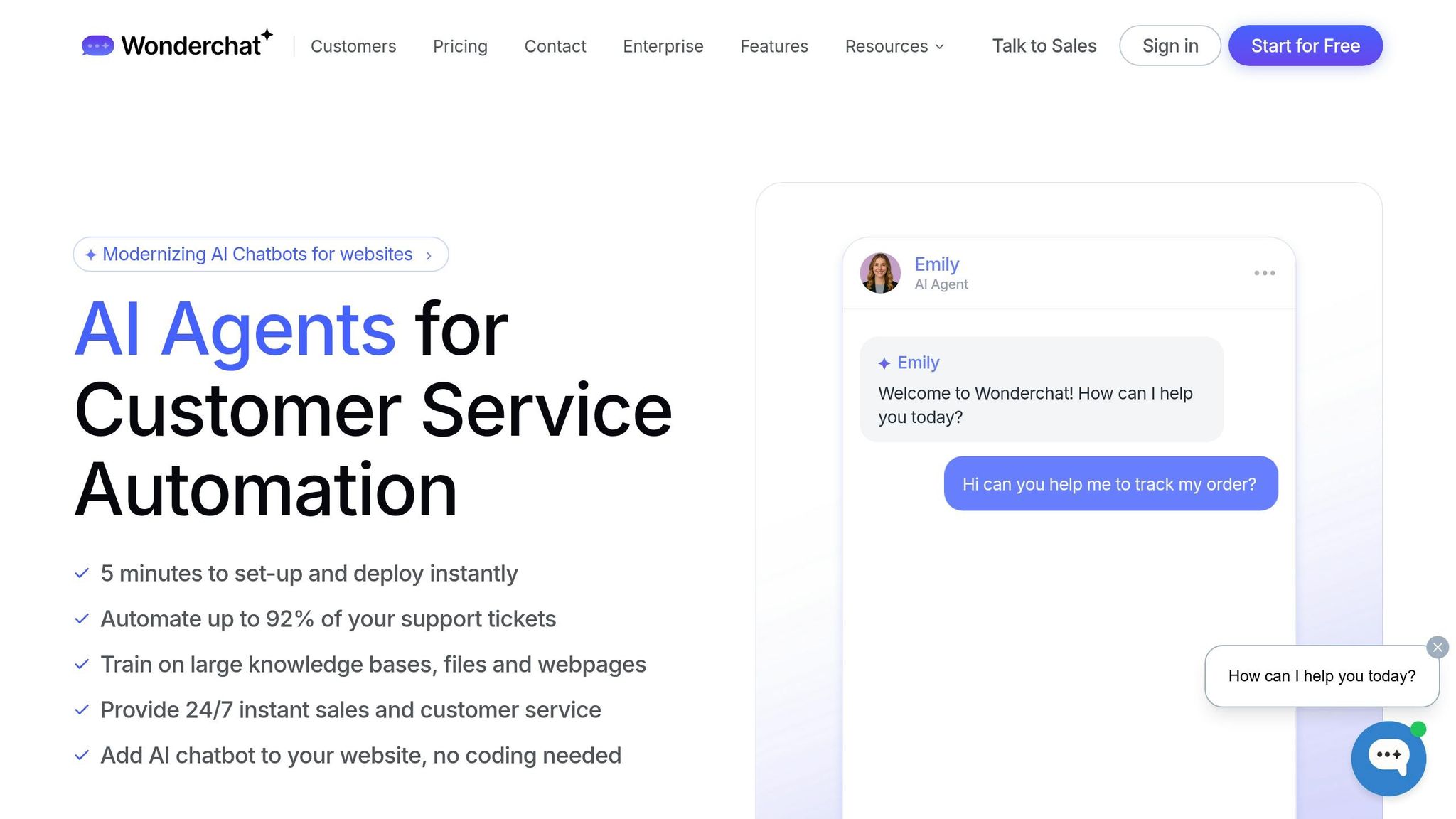
Wonderchat is a no-code chatbot builder designed to simplify patient scheduling and improve support workflows. It learns from existing documents - like scheduling policies, provider details, and insurance guides - in just 5 minutes. You can upload PDFs or link website URLs to get started. This quick setup, paired with its scheduling and messaging tools, makes it a powerful option for healthcare providers [16].
One CEO shared that Wonderchat helped reduce support queries by 70%, showing how it can lighten the load for healthcare teams [16].
Appointment Scheduling Capabilities
Wonderchat operates 24/7 across multiple platforms, assisting patients with tasks like choosing the right visit type (new patient, follow-up, specialist, or urgent care) and gathering insurance and preparation details. It also answers routine questions about availability, required documents, and cancellation policies. This system can cut scheduling workloads by up to 70%. To minimize no-shows, it automates appointment reminders and sends instant confirmations. Plus, it supports communication in over 100 languages, making it accessible to diverse patient populations [16].
Patient Messaging Features
In addition to scheduling, Wonderchat handles patient FAQs and onboarding using natural language processing. Its source-attributed answers ensure accurate responses, avoiding common AI errors. For more complex issues, it seamlessly escalates queries to staff through live chat, email, or existing helpdesk tools. Ryan Hanley, Founder and President of Rogue Risk LLC, shared his experience:
"Wonderchat has given us the ability to offer real-time answers to our customer's questions on their terms... The response has been tremendous" [16].
EHR Integration Compatibility
Wonderchat also integrates with electronic health record (EHR) systems like Epic and athenahealth. Using its APIs and SDKs, it enables direct appointment booking and automatic updates to patient records. The platform is designed to maintain HIPAA compliance, collecting only the necessary pre-booking information and steering clear of clinical records during the scheduling process. This ensures both functionality and security [15][16].
Compliance and Security Standards
Wonderchat prioritizes data security with strict HIPAA compliance and offers Business Associate Agreements for healthcare clients. It also meets SOC 2 and GDPR standards, ensuring robust privacy measures. Data is encrypted both in transit and at rest. For organizations with higher security needs, Wonderchat can be deployed in a Virtual Private Cloud (VPC) to isolate data. It also keeps immutable audit logs of all interactions involving sensitive health information and uses role-based access controls to manage permissions [15].
Pricing and Cost Structure
Wonderchat follows a message-based pricing model, starting at $0.02 per message. Clinics can explore its features with a 14-day free trial - no credit card required. For larger organizations needing full automation and advanced integrations, enterprise pricing is available. This managed SaaS approach offers a cost-effective solution, especially for smaller practices without dedicated IT teams, compared to building custom systems [15].
Platform Strengths and Weaknesses
This section provides a closer look at the standout features and challenges of each platform, building on the previous overviews. Each platform shines in specific areas but comes with its own set of trade-offs.
Prosper AI (Anna) is known for its voice-first design and integration with over 80 EHR/PM systems, including Epic and athenahealth. In January 2026, a Northeast OB/GYN group with more than 100 providers implemented Prosper AI's voice agent. Within weeks, the AI managed over 50% of front-desk scheduling, achieving zero-second wait times and reducing call abandonment by 89% [4]. However, setting up these integrations requires careful planning.
eesel AI is all about speed and flexibility. It offers a quick setup process - just minutes instead of weeks - and seamlessly connects to help desk systems like Zendesk and knowledge bases such as Google Docs. Its simulation mode allows testing on thousands of past patient interactions before going live [6]. However, it does require initial fine-tuning to adapt to specific healthcare environments. Pricing starts at $239/month (billed annually), making it a good option for mid-sized practices [6].
Hyro is built for large-scale operations, handling millions of interactions across phone, web, and SMS. It also features deep HL7/FHIR integrations. However, its enterprise contracts, starting at around $10,000 per month, make it less accessible for smaller practices [2]. For example, in 2025, Weill Cornell Medicine increased scheduled appointments by 47% and reduced website bounce rates by 31% after adopting Hyro's AI scheduling [10]. Michael Hasselberg, Chief Digital Health Officer at the University of Rochester Medical Center, highlighted its impact:
"Everybody is trying to get to online scheduling, and Hyro is the fast track. They allowed us to open online scheduling for patients with confidence" [10].
Ada Health specializes in clinical symptom assessment but lacks support for administrative tasks like scheduling or billing [6]. On the other hand, SmartBot360 offers pre-built healthcare templates based on real patient conversations, making it easy to deploy. However, it struggles with more complex or unique workflows [6].
Here’s a quick comparison of the platforms:
Platform | Primary Strength | Primary Weakness | Best For |
|---|---|---|---|
Prosper AI (Anna) | Deep EHR integration (80+) and voice automation [4] | Integration setup requires planning [4] | Multi-provider groups with high call volume |
eesel AI | Rapid setup (minutes) and high customization [6] | Requires initial tuning for healthcare [6] | Practices with existing help desk systems |
Hyro | Massive scalability for large health systems [2] | High pricing for independent practices [2] | Enterprise health systems |
Ada Health | Superior clinical symptom assessment [6] | Cannot perform administrative tasks [6] | Patient triage and health guidance |
SmartBot360 | Ready-to-use healthcare templates [6] | Less flexible for complex workflows [6] | Practices needing quick deployment |
Conclusion
Choosing the right AI chatbot platform means aligning your practice's size, focus, and priorities with the features a solution offers. Lead Receipt stands out as a scalable option that simplifies scheduling and enhances patient engagement for healthcare practices of all sizes.
Missed calls and scheduling issues can cost practices up to $150,000 annually[2]. The right chatbot can help recover lost revenue, reduce administrative tasks by as much as 60%, and noticeably improve patient satisfaction[1]. Before making a decision, ensure the solution includes HIPAA-compliant BAAs, test it with real patient scenarios, and confirm it integrates seamlessly with your EHR system[2][4].
Lead Receipt offers AI receptionist solutions that are fully customizable, available 24/7, and equipped with multilingual support. With plans designed to fit your practice's unique needs - ranging from web chat to unlimited call handling - it boosts clinical efficiency while delivering the patient-centered experience that modern healthcare demands.
FAQs
How long does it take to integrate an AI receptionist with my EHR?
Integrating an AI receptionist with your EHR system usually takes anywhere from 6 months to 2 years. For smaller practices, the process often wraps up within 6–12 months. However, larger hospitals might need 18–24 months or even longer. While some AI tools can be implemented fairly quickly, achieving full EHR integration requires more time due to technical setup, rigorous testing, and ensuring compliance with regulations.
What HIPAA safeguards should I confirm before going live?
Before introducing an AI chatbot into the healthcare space, it's crucial to ensure it aligns with HIPAA regulations. Key requirements include:
Encryption of Protected Health Information (PHI) using AES-256, both at rest and during transit.
A signed Business Associate Agreement (BAA) to define responsibilities for safeguarding PHI.
Audit logging to track access and activity related to sensitive data.
Role-based access controls to restrict data access to authorized individuals only.
Data residency options to ensure PHI is stored in approved locations.
These measures are essential to maintain compliance and safeguard patient information.
How do I estimate ROI from automated scheduling and messaging?
To gauge ROI, start by looking at how the system impacts missed appointments, staff time, and patient satisfaction. Compare key metrics from before and after implementation - such as no-show rates, time spent on scheduling, and satisfaction survey results. The financial gains often come from two areas: higher revenue due to reduced no-shows and lower labor costs thanks to automation. Plus, many platforms include built-in analytics tools that help track these metrics, making it easier to calculate ROI with accuracy.